
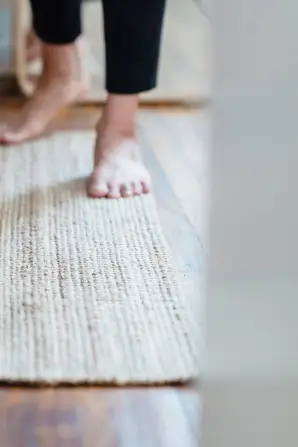
You come back from a morning at the beach or a walk along the estuary foreshore, and no matter how much you shake out the towels and rinse the dog’s paws, some sand always makes it inside. It clings to feet, hides in the tread of thongs, and rides in on the pets. When you live this close to the coast, sand is a constant, unavoidable houseguest. That steady drift of grit is one of the reasons professional carpet cleaning in Mandurah, WA becomes a practical part of protecting how long your carpet lasts.
Most of the damage sand causes is invisible. You don’t see it grinding away underfoot, and you can’t feel it once it has worked below the surface. But it is there, and it is slowly wearing your carpet from the inside out.
How Coastal and Estuary Sand Travels Through Your Home
Sand doesn’t stay by the door. It moves. Fine grains catch in the fibres of a doormat, then release as you step across it. From the entryway, foot traffic carries sand into hallways, living rooms and bedrooms, spreading it a little further with every trip.
Pets are efficient carriers too. Sand lodges between paw pads and in longer coats, then falls out wherever the animal settles. Children track it in from the garden and the car. Even a beach bag set down in the lounge sheds grit onto the carpet below.
Because Mandurah homes sit so close to beaches, dunes and the estuary, the supply of sand never really stops. Every household member becomes a delivery system, and the carpet is where most of it ends up.
Why Sand Acts Like Sandpaper on Carpet Fibres
Beach sand is made of hard mineral grains with sharp, angular edges. Under a microscope it looks like broken glass. When those grains sit on top of the carpet, they do little harm. The problem starts when they sink down to the base of the pile.
Once sand settles at the fibre roots, every footstep presses the pile down onto it. The fibres flex and rub against the abrasive grains, and the grains grind against the carpet backing. This repeated friction shears the fibres, splits their tips and thins the pile in exactly the spots you walk most.
This is why carpet in a coastal home often looks worn and dull long before it should. The colour fades and the texture flattens not because of dirt you can see, but because of grit you cannot. Sand accumulation is a sub-surface problem, which is what makes it so easy to overlook.
The Limits of Household Vacuuming
Vacuuming matters, and doing it often is one of the best habits you can keep. But a household vacuum pulls loose particles from the upper layers of the pile. It struggles to lift grit that has already migrated to the fibre base, especially in dense or plush carpet.
The deeper sand sits, the harder it is to dislodge with suction alone. Grains wedge between fibres and cling to the backing, out of reach of standard vacuuming. Over weeks and months, this trapped grit builds into a hidden reservoir of abrasive material.
Deep extraction methods work differently. Agitation loosens grit from the base of the pile, and high-powered extraction flushes it out with the rinse. This reaches the settled sand that routine cleaning leaves behind, which is why periodic deep cleaning is worthwhile in coastal households.
High-Traffic Zones Most Affected by Grit
Sand doesn’t spread evenly. It concentrates in predictable places, and those are the areas that wear first. Keep an eye on:
- Entryways and the first few metres of hallway inside external doors
- The main path between the front door, kitchen and living areas
- In front of couches, where feet rest and shed grit
- Bedroom doorways and the route to the bed
- Pet bedding and the spots where animals habitually lie
These zones take the heaviest foot traffic and receive the most incoming sand at the same time, so damage builds fastest there.
Habits That Reduce Sand Coming Indoors
You can’t stop sand entirely, but you can slow how much reaches the carpet. A few small routines make a real difference:
- Place quality mats at every external door, both outside and inside, and shake them out regularly
- Set up a no-shoes zone near entrances and keep a spot for footwear
- Rinse sandy feet and pet paws before coming in from the beach
- Keep a small brush or outdoor rinse point by the door for gear and towels
- Vacuum high-traffic paths more often than the rest of the house
The goal is to catch sand at the threshold before it gets walked deeper into the home.
Signs Your Carpet Is Holding Hidden Sand
Trapped grit gives itself away if you know what to look for. Run your fingers deep into the pile in a high-traffic area and rub the base of the fibres. A gritty, sandy feel is a clear sign. You might also notice a faint crunch underfoot in worn areas, or see the pile looking flat and lifeless along walkways while sheltered spots stay plush.
If your vacuum keeps pulling sand from the same spots week after week, that usually means more is still lodged below the surface. When these signs appear, a deeper extraction is the practical way to clear the reservoir before it does further damage.
Sand is only one of the fine particles that make their way into homes near the coast and across Mandurah’s suburbs. Beyond gritty beach sand, local homes also contend with mineral-based dust and residue drawn in from surrounding hardscapes and garden watering, which bring staining problems of a very different kind that are worth understanding on their own terms. It’s also worth remembering that the same coastal setting shapes how carpets take up and release moisture, so grit is best managed as part of a broader picture of coastal carpet care.