
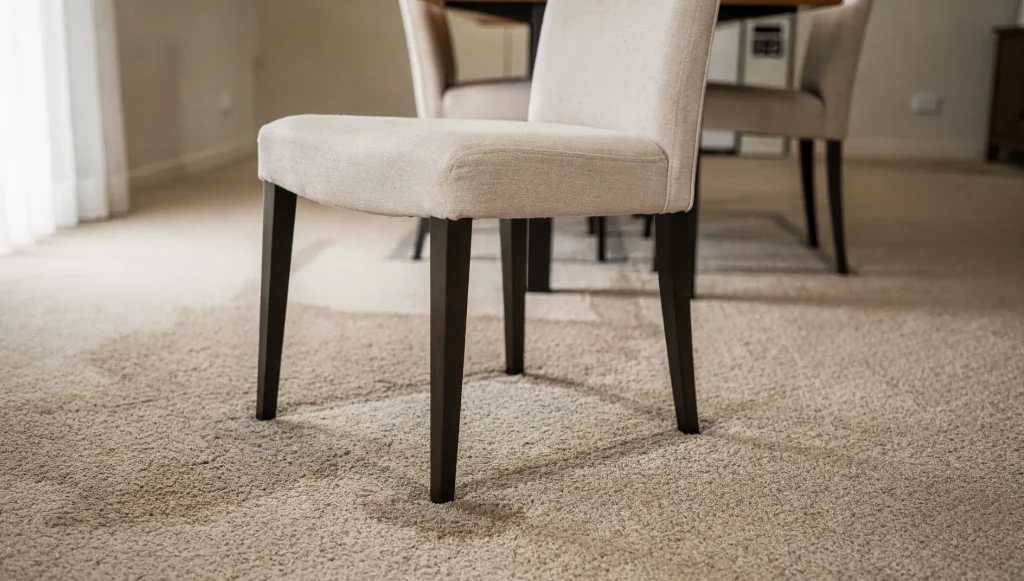
Look closely at the chair you sit in every night. Dining chair seats quietly collect crumbs, dropped food, drink splashes and a dull layer of grime from everyday meals – and most of it goes unnoticed until the fabric feels sticky or looks worn. Because these seats are used two or three times a day, cleaning dining chair seats and dealing with the crumbs, spills and built-up grime that settle into them becomes an ongoing task rather than a one-off. When grime sets in deep or a spill has long since dried, the upholstery cleaning specialists at Estuary Carpet Cleaning can help restore the fabric safely.
Prefer to watch or listen?
Listen onApple Podcasts
Why Dining Chair Seats Get Dirtier Than They Look
A dining seat faces a unique mix of soiling. Crumbs and dry food debris work their way into seams and piping, where they sit out of sight. At the same time, hands, forearms and food oils leave an invisible film across the surface with every meal.
This slow transfer of body oils and food residue is what makes seats feel tacky even when they look clean. The same oily build-up that affects other upholstery is explained in our piece on why sofas develop greasy marks over time, and dining seats collect it through everyday contact just as readily.
Add children, guests and regular spills, and a dining seat absorbs more than people realise. The fabric may look fine from across the room while holding months of accumulated grime.
First Steps: Vacuuming Crumbs and Loose Debris
Always start dry. Vacuuming lifts crumbs and loose debris before any moisture turns them into a paste that is harder to remove.
Use an upholstery attachment and work methodically:
- Run the nozzle across the whole seat surface first.
- Press into the seams and piping where crumbs collect, using the crevice tool.
- Lift any removable cushion and vacuum underneath and around the frame.
- Finish with the edges, where food often rolls and hides.
Skipping this step is one of the most common mistakes. Wetting a seat full of crumbs spreads the debris and can leave gritty residue in the fabric.
Handling Fresh Spills on Dining Seats
A fresh spill is far easier to manage than a dried one, so act immediately. The single most important rule is to blot, not rub.
Rubbing pushes liquid deeper into the fibres and the foam beneath, and it can fray or distort the fabric. Instead, press a clean, absorbent cloth gently onto the spill and let it draw the moisture up. Work from the outside of the spill towards the centre so you do not spread it further.
Repeat with a dry section of cloth until little moisture transfers. Blotting quickly protects the fabric and reduces the chance of a lasting mark setting in.
Tackling Built-Up Grime Without Over-Wetting
Sticky, dull patches come from accumulated oils and residue rather than a single spill, so they need a gentle, controlled approach. The goal is to lift grime from the surface without soaking the cushion or the foam underneath.
Use a slightly damp cloth rather than a dripping one. Too much water can seep into the padding, where it dries slowly and risks odour or watermarks. Work in small areas, wipe gently, and turn the cloth often so you are lifting grime away rather than moving it around.
Light, patient passes achieve more than heavy scrubbing. Harsh pressure on a loaded fabric simply grinds residue deeper into the weave.
Fabric Testing, Drying and Deodorising
Before applying any cleaning product or moisture, test a small, hidden area of the fabric first. Different upholstery responds differently, and a quick test shows whether the colour holds and the fabric tolerates water.
Controlled moisture is the key to good drying. A lightly cleaned seat should dry evenly without stiff patches or rings. Help it along with good airflow – open a window or run a fan – and avoid using the chair until it is fully dry to the touch.
To keep seats smelling fresh, let the fabric air out between uses and address spills promptly, since trapped moisture is what causes stale odours. In Perth’s warmer, drier months, seats placed in a ventilated dining area usually dry quickly, but in cooler, damper weather you may need to allow extra time.
Common Mistakes and the Limits of DIY
Most problems with dining seats come down to a handful of avoidable errors:
- Wetting the fabric before vacuuming out crumbs.
- Rubbing spills instead of blotting them.
- Over-wetting the cushion so moisture reaches the foam.
- Skipping a patch test and risking colour transfer or damage.
Even careful home cleaning has limits. Grime that has worked deep into the fibres, or residue that keeps resurfacing after it dries, often sits below what surface wiping can reach. In those cases, professional hot water extraction can lift embedded soiling and draw moisture back out in one controlled process, leaving the seat clean without saturating the padding.
Once your dining chairs are clean and fresh again, their long-term appearance depends on more than just regular wiping. Seats positioned near windows in bright WA dining spaces face a slower, quieter challenge – the gradual effect of strong natural light on upholstery fabric, which can fade and weaken even well-kept seats over time.